

In New York, people don’t read websites slowly. They scan. They decide fast. And if they don’t find what they came for, they leave. Many NYC agents still use one page for both buyers and sellers. Everything mixed together. Listings. Selling advice. Contact forms. It sounds convenient, but it creates confusion. A buyer searching from the subway and a seller checking values late at night are not looking for the same thing. When they land on the same page, neither feels fully understood. In a fast market like New York, clarity matters more than design. Separate buyer and seller pages help visitors feel like the site was built for them, not everyone at once.
New York buyers usually start online. They browse listings between meetings or during a commute. They want to explore neighborhoods and prices without pressure.Sellers come with a different mindset. Many already know their building and block. What they want is to understand the process, timing, and what makes New York sales different.When both groups see the same page, the message gets diluted. Buyers get distracted by selling language. Sellers feel unsure when the page talks too much about listings.For New York real estate agents, this leads to weak inquiries. Calls that go nowhere. Emails from people who are not ready. Clear pages help start better conversations.
One mistake is using a single “Buy or Sell” page. It forces visitors to do the work of figuring out what applies to them. Most won’t.Another mistake is talking too much about the agent instead of the process. Awards and years of experience matter later, not on the first click.Some pages overwhelm visitors with long forms. Too many required fields scare people off, especially in NYC where privacy matters.Many sites also ignore local context. Selling a co-op in Manhattan is not the same as selling a townhouse in Brooklyn, yet the pages sound identical.
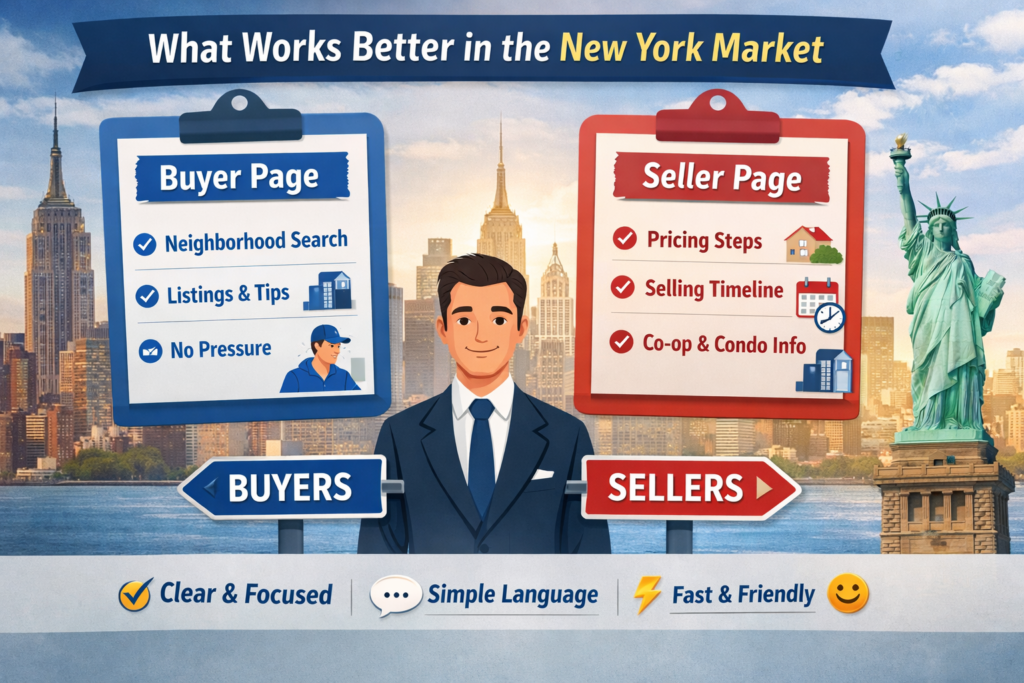
What works is separation. One page that speaks only to buyers. One page that speaks only to sellers.Buyer pages should feel open and helpful. Easy search. Clear neighborhood paths. No pressure to contact before they are ready.Seller pages should explain steps clearly. Pricing expectations. Timelines. What makes New York transactions unique.Short sections work best. Plain language. No guessing. When visitors feel guided instead of sold to, they stay longer.In New York, a good website respects the visitor’s time.
• Create one page only for buyers
• Create one page only for sellers
• Use simple language, not industry terms
• Keep forms short and optional
• Mention New York neighborhoods naturally
• Remove anything that causes confusion
• Test pages on your phone, not just desktop
If you want a clear overview of how agent websites should work in this market, this guide explains it in plain terms.
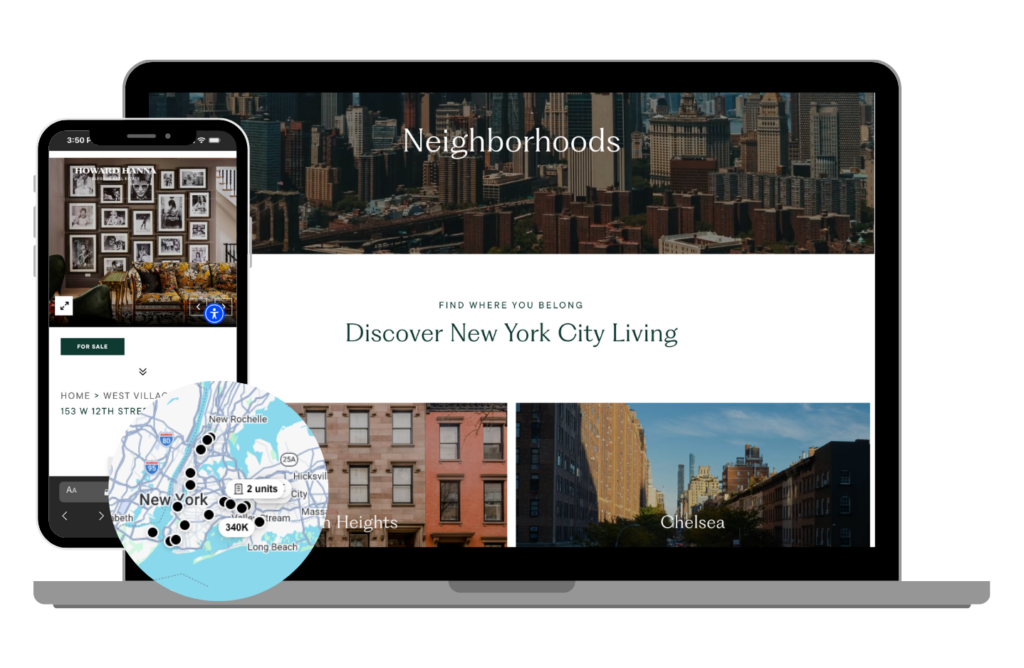
Yes. New York buyers expect to see real listings immediately. Without IDX, they leave your site.
Yes. We optimize IDX pages to load quickly and work smoothly on mobile.
You won’t replace Zillow, but you can capture serious buyers who want local agent support instead of portals.
Most New York real estate websites are completed within 7–14 days, depending on features.